Holiday camps in Brussels
A practical guide for expat families: what stages are, when to book, how days work, and what to check before choosing.
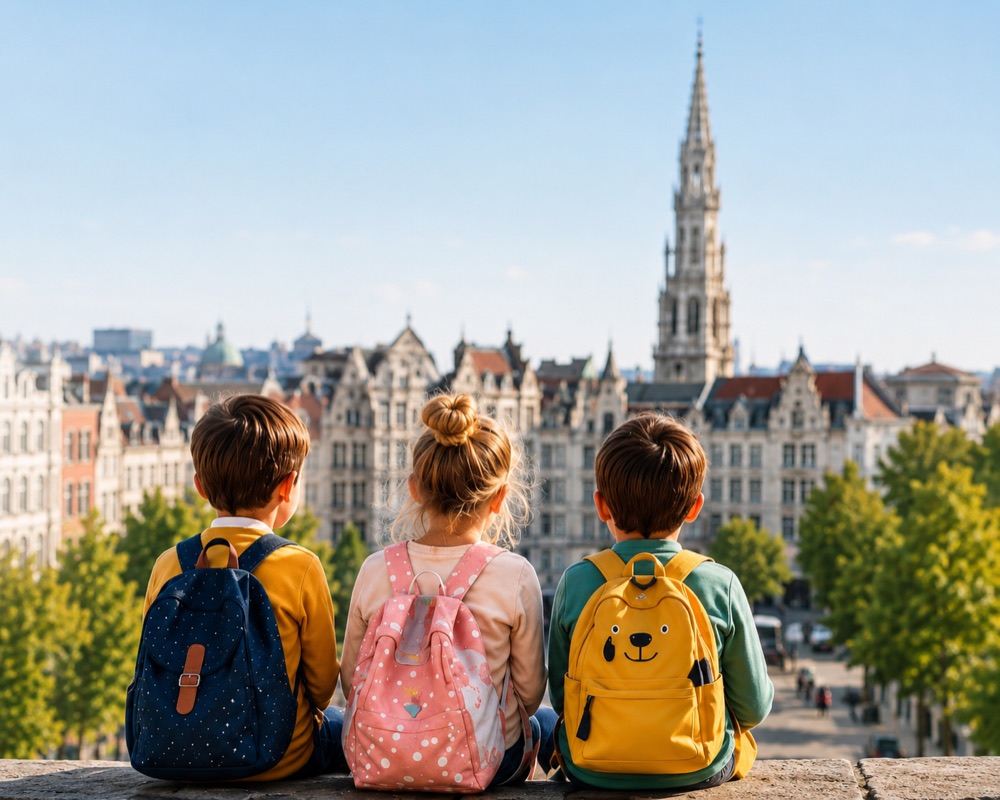
New to Belgium? Here’s what stages are.
If you have just moved to Brussels, one of the first things you may wonder is: what do families do with children during weeks of school holidays while parents are still working? The answer you will hear often is “stages,” holiday camps that combine childcare, activities, and social time for children.
Despite the name, it has nothing to do with internships or work experience. The French word stage simply means an organized activity during school holidays.
Holiday camps are extremely common in Belgium. Thousands of children attend them every school break, whether for sports, arts, science, languages, nature, music, or simply fun childcare during the holidays. For many Belgian families, booking holiday camps is part of the yearly routine.
At a glance
Hundreds of camps take place across Brussels every school holiday.
Most camps welcome children from around 2.5 or 3 years old up to teenagers.
Some camps run all day, others only mornings or afternoons.
Camps may be in French, Dutch, English, or multiple languages.
Themes range from football and dance to robotics, cooking, theatre, and nature.
Popular camps often fill up weeks, or even months, in advance.
When do holiday camps take place?
Holiday camps usually follow Belgian school holidays.
Summer holidays
- Belgian French-speaking and Dutch-speaking schools usually cover July and August, with exact start and end dates differing by community.
- European, French, and international schools may begin or end earlier.
Autumn holiday (Toussaint)
- Usually around Toussaint / All Saints.
- Some calendars give one week, others two, and the weeks may not overlap.
Christmas holidays
- Usually two weeks around Christmas and New Year.
- Calendars are often broadly aligned, but first and last days can differ by school system.
Carnival / Spring holiday
- Belgian calendars may place this break in February or early March.
- French-speaking, Dutch-speaking, European, and French-school calendars can differ, so provider calendars matter.
Easter holidays
- Some schools follow an Easter-linked break; others follow a later spring break.
- This is often where Belgian communities, European schools, French schools, and international schools differ most.
Not all schools follow the same calendar
This surprises many expat families. Some providers organize camps according to Belgian French-speaking schools, Belgian Dutch-speaking schools, European Schools, French schools, or international schools. That means you can often find camps even if your child’s school is on holiday while Belgian schools are not.
Official calendar links
French-speaking Belgian schools Fédération Wallonie-Bruxelles school calendar Dutch-speaking Belgian schools Vlaanderen school holidays European Schools European Schools calendar rules and holiday structure Lycée français Jean Monnet French national curriculum calendar in BrusselsWhen should you register?
Earlier than most newcomers expect. Some popular camps open registrations two to four months before the holidays.
For sought-after providers, places can disappear quickly, especially for summer, Carnival holidays, and Easter holidays. If you wait until the week before the holidays, your options may be much more limited.
What does a typical day look like?
Every provider is different, but a full-day camp often looks something like this:
Some camps only run mornings or afternoons. Others offer flexible schedules. Nap time is not automatic: it is usually available only when the camp is clearly designed for very young children.
Before and after care
This is one of the biggest differences between providers. Some include early drop-off, late pick-up, and supervised free play. Others expect parents to arrive at precise times.
If you are working full-time, checking these hours before booking is essential.
Lunch and snacks
In the vast majority of cases, food is not provided unless the camp explicitly says so. Plan to pack lunch, a water bottle, and morning or afternoon snacks. Some venues have a microwave and can warm packed food, but do not assume this unless it is mentioned.
Languages and local-language comfort
Brussels is multilingual, and so are many holiday camps. You can find French-only camps, Dutch-only camps, English-speaking camps, bilingual camps, and multilingual environments.
Children do not always need to speak French or Dutch fluently before joining. For sports, arts, dance, or outdoor activities, many children adapt quickly through the activity itself. If language comfort matters for your child, look for bilingual or English-speaking camps, or contact the provider before booking.
Some expat parents deliberately choose a camp in another language so children can practise naturally. Others prefer a familiar language for the first few school holidays. Both are common choices.
Age requirements
Every provider defines its own age groups. Some are very strict. Others accept children who are close to the minimum age or allow siblings to stay together.
It is common to find camps for preschoolers, primary school children, pre-teens, and teenagers.
Nappies and toilet accidents
When a camp is clearly aimed at very young children, providers often expect that some children may still need help with nappies, changing, or toilet accidents. They will usually ask parents to bring spare nappies, wipes, and changes of clothes.
For slightly older children who are mostly clean but may still have occasional accidents, it is worth packing spare clothes discreetly and checking the provider’s policy before the first day.
What kinds of camps exist?
Brussels offers an enormous variety: sports, football, dance, gymnastics, circus, theatre, music, arts and crafts, science, robotics, coding, nature, cooking, animals, languages, adventure, and multi-activity camps.
Many providers organize several themes during the same holiday.
How much do holiday camps cost?
Prices below are per week, based on Mabel’s current Brussels catalog of camps with a listed price.
Before booking, check whether you are eligible for reimbursement. Many Belgian mutuelles (health insurance funds) offer partial refunds for children’s activities, including certain holiday camps, sports activities, or youth programs. The conditions and amounts vary, so check directly with your mutuelle.
Some employers also reimburse part of childcare costs through employee benefits, and some expenses may be eligible for tax advantages depending on your situation.
What should my child bring?
- Comfortable clothes
- Weather-appropriate jacket
- Water bottle
- Lunch and snacks if required
- Spare clothes, and nappies or wipes for younger children if needed
- Hat and sunscreen in summer
- Indoor shoes or sports equipment if requested
Frequently asked questions
Can I register for only one day?
Most camps are booked by the week, although some providers offer individual days.
Can siblings attend together?
Often yes, but not always in the same activity group.
Do camps sell out?
The most popular ones absolutely do.
Are camps only for Belgian families?
Not at all. Brussels camps welcome many international families every year.
Can my child attend if we just moved to Belgium?
Yes. You generally do not need to attend a Belgian school unless the provider specifies otherwise.
What if my child has allergies or special needs?
Policies vary considerably. Contact the provider before booking to discuss accommodations.
Compare camps from many providers in one place.
With Mabel you can discover camps during your child’s holidays, filter by age and language, explore themes, compare providers, and find camps near you.
Tips for first-time expat parents
- Do not wait until the last minute to register.
- Double-check that the camp follows your child’s school calendar.
- Check drop-off and pick-up hours before booking.
- Do not worry too much if your child does not speak French or Dutch yet. Many international children attend Brussels camps every year.
- If your child loves a particular provider, note when registrations usually open. Many families book the same camps every holiday.